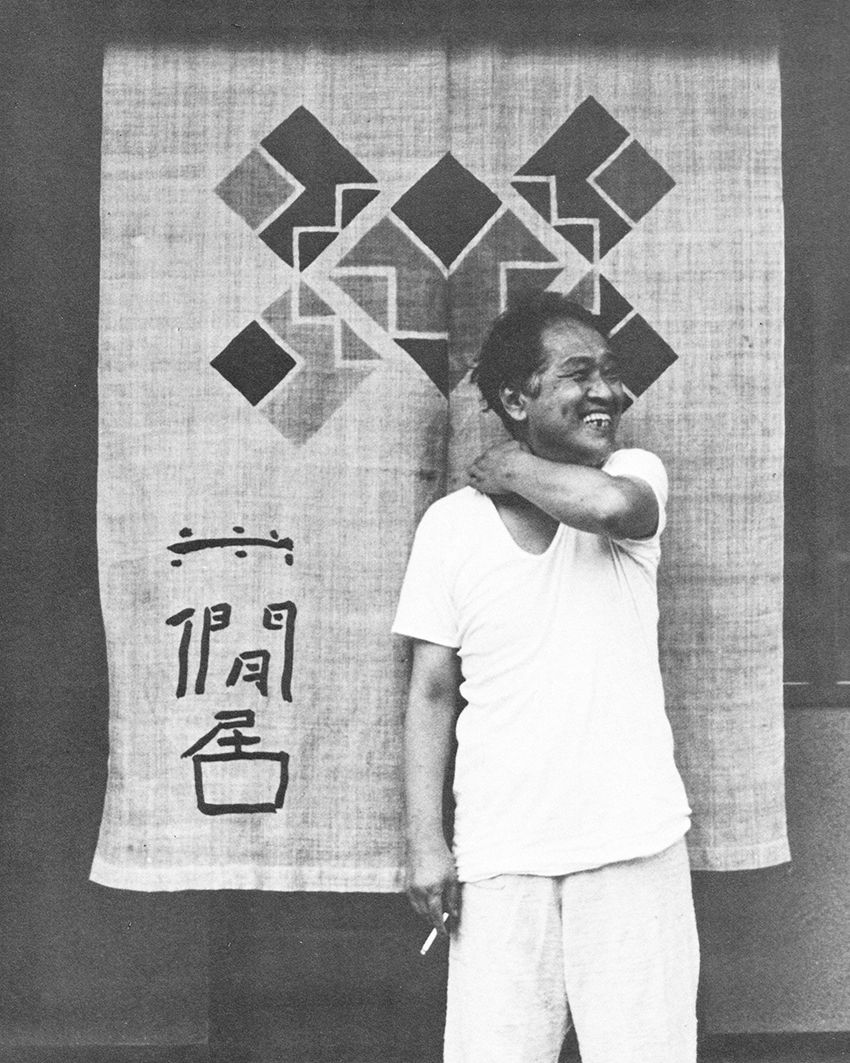
Yagi Kazuo
1918–1979
八木一夫
Yagi Kazuo was a Japanese ceramic artist whose work redefined the possibilities of clay in the post-war period. Born in Kyoto, he studied sculpture and ceramics before establishing an independent studio practice in the city.
In 1948 he co-founded the avant-garde ceramic group Sōdeisha, alongside artists including Yamada Hikaru and Suzuki Osamu. The group sought to break away from traditional pottery and the dominant folk craft aesthetics of the time, exploring clay as a medium for abstract sculptural expression rather than functional vessels. Through their exhibitions and manifesto, Sōdeisha played a decisive role in the emergence of modern Japanese ceramic art.
Yagi’s own work developed this radical approach through a series of non-functional ceramic objects that emphasised form, surface and spatial presence. His celebrated work Mr. Samsa’s Walk (1954) became one of the most iconic examples of this new direction in ceramics.